

Golu, Bommala Koluvu & Gombe Habba: Navratri Traditions and Golu Return Gift Ideas for 2026
There is something magical about a South Indian home during Navratri. Lamps are lit, flowers frame the doorway, devotional songs drift through the rooms, and on a series of beautifully arranged steps, dolls begin to tell stories of gods, goddesses, villages and everyday life.

This is Golu, known as Bommai Golu in Tamil Nadu, Bommala Koluvu in Andhra Pradesh and Telangana, and Gombe Habba in Karnataka. In 2026, Sharad Navratri begins on Sunday, 11 October, and Vijayadashami (Dussehra) falls on Tuesday, 20 October.
Whether you are hosting Golu for the first time or the thirtieth, this guide walks you through the tradition, the nine days, the food and the music, and, most importantly for hosts, how to choose a thoughtful Golu return gift that your guests will actually use long after the festival.
|
Navratri & Dussehra 2026 at a glance Navratri begins (Ghatasthapana): Sunday, 11 October 2026 Durga Ashtami: 18 to 19 October 2026 (varies by panchang) Maha Navami (Saraswati Puja and Ayudha Puja): Monday, 19 October 2026 Vijayadashami (Dussehra): Tuesday, 20 October 2026 (21 October in Bengal, Assam, Odisha and Tripura) |
What Is Golu? The Navratri Doll Display Explained
Golu is the traditional display of dolls and figurines during Navratri. Families arrange them on multiple steps, traditionally in odd numbers, creating a miniature world filled with gods and goddesses, mythological characters, saints and sages, musicians and dancers, weddings, markets, villages, animals, traditional occupations, temples and even contemporary themes.
For many families, the dolls are not simply decorations. They are memories. A doll inherited from a grandmother may sit beside a new piece bought this year. A scene created by a child may sit alongside an elaborate traditional display. Every Golu tells a story, and every year the story grows.
Golu and the Grandeur of Mysuru Dasara
When we think of Dasara in Karnataka, it is impossible not to think of Mysuru. The illuminated Mysuru Palace, royal traditions, cultural programmes, processions and rituals make Mysuru Dasara one of the most iconic celebrations associated with the festival.
Interestingly, the palace has its own Gombe Thotti, the Dolls’ Pavilion, connecting the grandeur of royal Dasara with the humble beauty of dolls and storytelling. It is a reminder that tradition exists at every scale: from a royal palace to a living room, from thousands of lights to a single diya, from a grand procession to a family gathering.
How Is Golu Arranged? Steps, Themes and Meaning
Golu is displayed on steps, called padi. The arrangement varies between families, but commonly:
-
The upper steps feature prominent deities and divine figures.
-
The middle steps may include saints, sages, musicians and mythological characters.
-
The lower steps often tell stories of everyday life, such as villages, markets, weddings, animals and traditional occupations.
Some families create a new theme every year. Others slowly build their collection over generations. That is why Golu is more than a festive decoration. It is a living family archive.
Nine Days of Golu: Prayer, Food, Music and Togetherness
Rituals vary between families and communities, but the nine days of Navratri are generally filled with prayer, flowers, lamps, naivedyam, music and visits from friends and family. Here is a day-by-day look.
Day 1: Welcoming Navratri
The Golu is opened and the dolls are arranged. The family performs the customary puja, lights the lamp and offers flowers, fruits and naivedyam according to tradition.
Day 2: Prayer continues
The home fills with the fragrance of flowers, incense and traditional food. Families may offer different naivedyam and sundal each day.
Day 3: Music and bhajans
As guests begin visiting, Golu becomes a gathering place. Children admire the dolls, elders share stories and devotional songs become part of the evening.
Day 4: Storytelling
Golu is a gentle classroom. Who is this deity? Why is this scene displayed? Tradition passes from one generation to the next through conversation, not textbooks.
Day 5: Guests and tambulam
Women may be invited home for Golu. Kumkum, turmeric, flowers, prasadam and thamboolam are offered, and many families add a small return gift. This is where gifting becomes part of the ritual.
Day 6: The beauty of the display
By now the home is at its festive best, with lamps, flowers, rangoli and traditional vessels. Golu becomes both a spiritual space and a visual experience.
Day 7: Celebrating Shakti
Navratri honours the divine feminine. Women gathering to receive kumkum, sing and share prasadam is one of the loveliest social aspects of Golu.
Day 8: Knowledge and Saraswati
Ashtami carries special significance in many traditions. Books, musical instruments and objects associated with learning may be worshipped according to family custom.
Day 9: Saraswati Puja and Ayudha Puja
Maha Navami is an important day in the Dasara tradition. Families may worship books, tools, vehicles and instruments, a reminder that the things that help us create, learn and work also deserve our gratitude.
What Is Offered as Naivedyam During Navratri?
There is no single menu followed by every Golu household. One of the most popular traditions is preparing a different variety of sundal each day. Depending on the family, offerings may include:
-
Chickpea, green gram, black chana and peanut sundal
-
Payasam and sweet pongal
-
Fruits and coconut
-
Traditional sweets and savouries
The food is prepared, offered and then shared with guests. What is offered with devotion is eventually shared with love.
Songs and Bhajans Sung During Golu
Golu evenings are often filled with devotional music: Devi bhajans, the Lalitha Sahasranama, Mahishasura Mardini, Saraswati prayers, Lakshmi devotional songs and Carnatic compositions. Depending on regional and family traditions, compositions associated with Purandara Dasa, Thyagaraja, Muthuswami Dikshitar and Annamacharya may also be part of the gathering.
And sometimes the most precious songs are not famous at all. They are the ones a grandmother taught her daughter, and the daughter now teaches her child.
Aarti, Kumkum and Thamboolam: The Heart of Golu Hosting
After the prayers and songs, aarti is performed. Guests then receive kumkum, turmeric, flowers, thamboolam, prasadam and a small return gift. It is more than a ritual exchange. It is a gesture of goodwill, a way of saying: “Thank you for being part of our celebration. Take a little of this happiness home with you.”
And that is exactly why choosing the right Golu return gift matters.
What Makes a Good Golu Return Gift?
A beautiful return gift is useful, beautiful, easy to carry, appropriate for the occasion and memorable. Instead of something that sits unused in a cupboard, many modern hosts now choose functional gifts that become part of the recipient’s home. It also helps to skip single-use plastic and choose gifts that last.
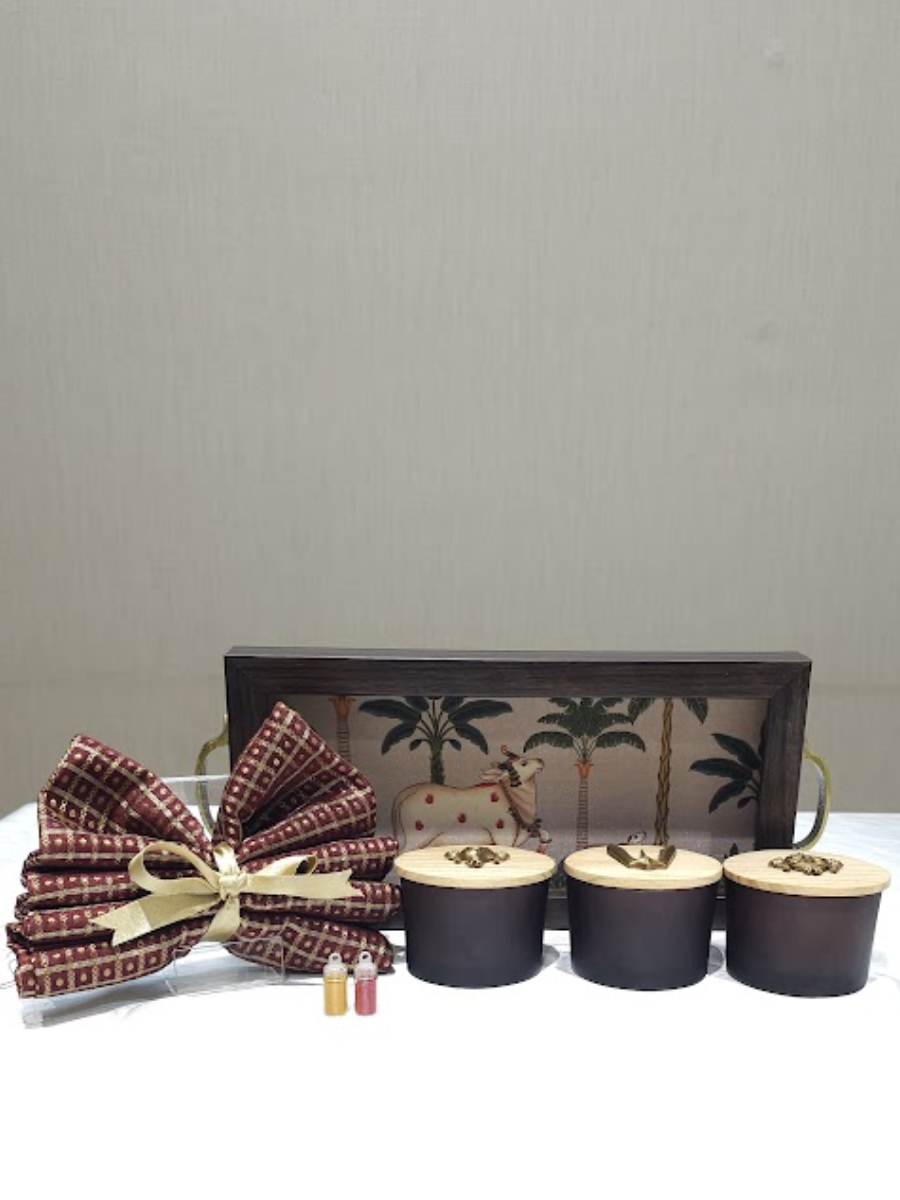
Traditional Golu return gift ideas
-
Diyas and pooja accessories
-
Decorative thalis and handcrafted trays for kumkum and offerings
-
Traditional décor pieces and handcrafted baskets for flowers and fruit
Contemporary Golu return gift ideas
-
handcrafted trays and serveware for everyday use
-
candle holders that brighten a dining table or shelf
-
aroma products for a festive fragrance at home
-
Durable, kitchen-ready cast iron pan for gifting that is truly practical
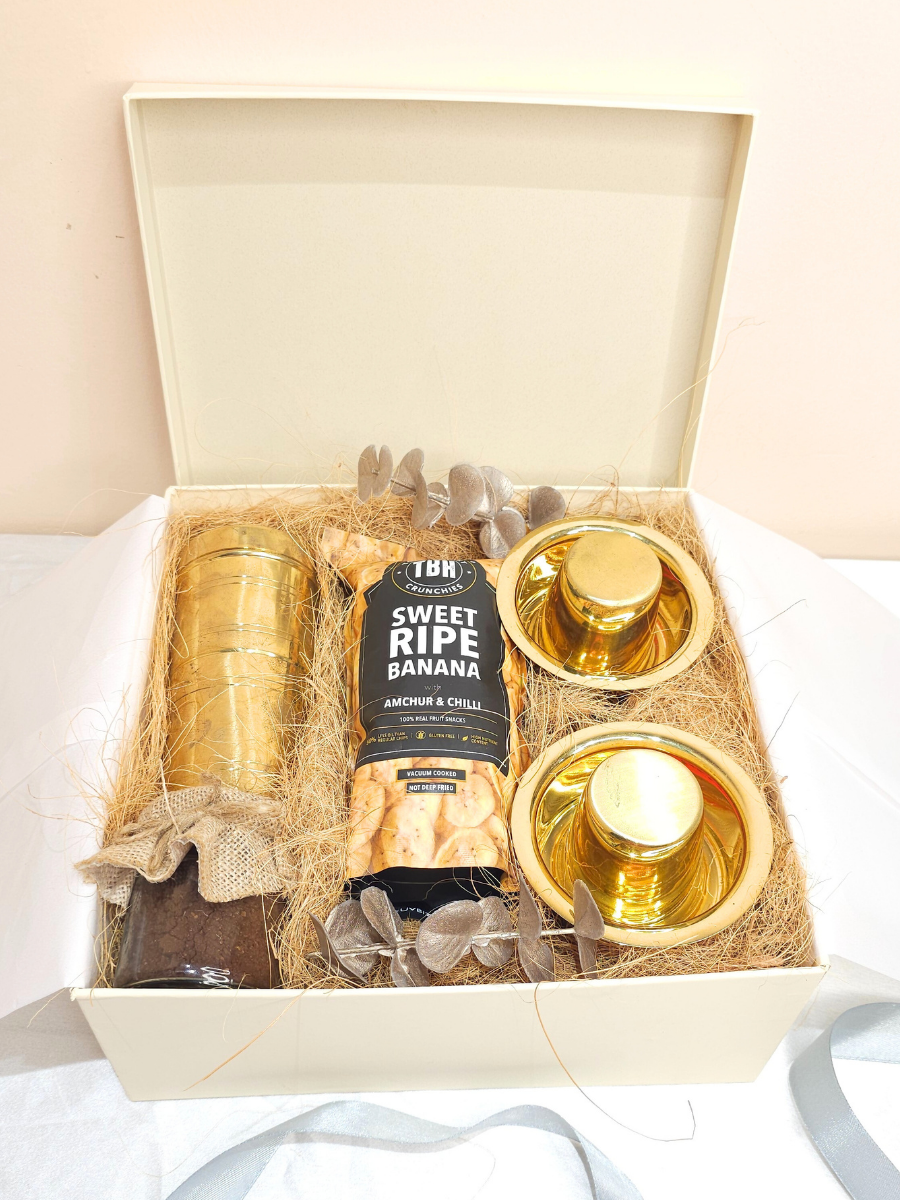
Premium thamboolam hampers
-
Mini curated gift hampers that bring several items together
-
Festive gifting sets from our home décor collection
-
Premium thamboolam gift sets for a more elevated Golu
Golu Return Gift Ideas by Guest Count and Budget
The right gift depends on how many guests you are hosting and what you plan to spend per gift. Use this as a quick guide, then fine-tune with your own budget.
|
Guest list |
Smart gift approach |
Gift ideas to consider |
|---|---|---|
|
Intimate Golu (up to 20 guests) |
Choose one standout, personal gift |
Decorative trays, candle holder pairs, vases, cast iron cookware |
|
Community gathering (around 50 guests) |
Pick one hero product and pack it beautifully |
Small baskets, diya and candle sets, aroma products, mini thamboolam sets |
|
Large celebration (100+ guests) |
Standardise one lightweight, easy-to-carry gift |
Compact décor pieces, festive pouches, bulk thamboolam gift sets |
|
Premium or corporate hosting |
Go for curated, branded presentation |
Curated hampers, gift combinations, custom bulk hampers |
How to Plan Your Golu Gifting in 5 Simple Steps
-
Count your guests and add a small buffer for surprise visitors.
-
Fix a budget per gift, so choosing becomes easier.
-
Decide on a style: traditional, contemporary or a mix of both.
-
Think about weight and packaging, since guests will carry the gift home.
-
Order early. Bulk orders and gift combinations need preparation time, and Navratri lasts only nine days.
Why Choose WrapArts for Navratri and Dussehra Gifting
At WrapArts, a Bengaluru-based gifting and home décor brand, we believe a festive gift should not have a short life. The festival may end. The gift should not. Our philosophy is simple: beautiful, functional, thoughtfully curated, handcrafted products that continue to live in someone’s home long after Navratri, with pan-India shipping so your gifts can reach guests wherever you are.
Whether you are hosting Golu for 20 women, planning thamboolam for 50 guests, organising a gathering for 100, or exploring bulk and corporate gifting, we can help you curate the right combination.
|
Tell us just 3 things: 1. How many guests? 2. Your budget per gift? 3. Traditional or contemporary? We will help you find the right options. |
GET MY GOLU GIFT OPTIONS ON WHATSAPP
Send GOLU + quantity + budget on WhatsApp and we will share curated options.
Prefer to browse? Explore our premium Golu return gifts, thamboolam gift sets and home décor collection.
Frequently Asked Questions About Golu and Navratri 2026
When is Navratri 2026?
Sharad Navratri 2026 begins on Sunday, 11 October 2026 and runs for nine days until Monday, 19 October, followed by Vijayadashami (Dussehra) on Tuesday, 20 October. Exact timings can vary by region and panchang.
When is Dussehra (Vijayadashami) in 2026?
Dussehra falls on Tuesday, 20 October 2026 in most of India. Bengal, Assam, Odisha and Tripura observe Vijaya Dashami on 21 October.
What is Golu or Bommai Golu?
Golu is the traditional Navratri display of dolls and figurines arranged on steps. It is called Bommai Golu in Tamil Nadu, Bommala Koluvu in Andhra Pradesh and Telangana, and Gombe Habba in Karnataka.
How many steps should a Golu have?
Traditionally Golu is arranged on an odd number of steps, such as 5, 7, 9 or 11, but families follow their own customs and available space.
What is thamboolam (tambulam) and what does it include?
Thamboolam is the auspicious offering given to guests who visit for Golu. Depending on family custom it includes kumkum, turmeric, flowers, fruit or coconut, betel leaves and nut, prasadam and a return gift.
What are good Golu return gift ideas?
Choose gifts that are useful, beautiful and easy to carry: diyas, decorative trays, candle holders, vases, baskets, aroma products, cast iron cookware or a curated mini hamper. Match the gift to your guest count and per-gift budget.
Does Mysuru Palace have a dolls' display?
Yes. Mysuru Palace has a Gombe Thotti, the Dolls' Pavilion, which connects the royal Dasara tradition with the Karnataka custom of arranging dolls.
Can I order Golu return gifts in bulk from WrapArts?
Yes. Send WrapArts a WhatsApp message with GOLU, your guest quantity and budget per gift, and the team will share curated options for 20, 50, 100 or more guests.
Because the Best Golu Gifts Don’t End With Navratri
The dolls will return to their boxes after Vijayadashami. The lamps will be put away and the rangoli will fade. But a thoughtful gift can continue to live on a dining table, beside a lamp, on a shelf or in someone’s everyday home.
Choose a Golu gift that becomes part of their home, not part of their storage.
Happy Navratri and Happy Dussehra from all of us at WrapArts. Follow our festive stories on Instagram @wraparts_blr.
Related Posts

How to Order Pregnancy Announcement Gifts from Abroad to Surprise Your Parents in India (Ordering Guide)

Why Pregnancy Announcements Are India's Newest Family Trend: 70 Surprise Message Ideas for Nani, Thatha, Mamu & More

Where Does Your Gift Actually End Up After Unboxing? The Truth About Gift Hampers Nobody Talks About

Your Product Is Ready. But Is It Hamper-Ready? A Guide for Indian Small Brands

Return Gift Traditions Across India: A Complete South-to-North Guide

85 Ganesh Chaturthi Wishes 2026: Messages for Family, Friends & Colleagues + Mantras
